What makes a designer valuable beyond the tools?
Tools change. What makes your thinking worth hiring? Michael McWatters on curiosity, meaningful portfolio work, and the human decisions behind good design.
Hosted by Nick Mann
STAY CURIOUS.
Your thinking matters.
Build more than
tool fluency.
Stay curious about the problem.
Michael’s career has crossed motion design, UX, content, and leadership. Curiosity about people and their problems has outlasted any particular tool.
Make your perspective visible.
A personal project can demonstrate original thinking and execution. Choose work that helps people understand the kind of designer you want to become.
Show the constraints behind the outcome.
Explain what you could and could not do, the alternatives you considered, and why you landed where you did.
Keep ownership of the thinking.
Michael describes using AI to explore and collaborate while retaining human judgment about the problems worth solving.
The tools will change.
Your curiosity can keep growing.
When new tools make building easier, what makes a designer’s contribution valuable? Michael McWatters joins Nick Mann to explore the knowledge, judgment, and curiosity behind the work.
Michael shares lessons from a career spanning early web design, experience design at TED, and product design leadership at HBO Max. They discuss growing as an individual contributor or manager, making stronger portfolio choices, and understanding a problem before rushing into execution.
The conversation also explores AI’s possibilities and limits, the context hidden behind product decisions, and why caring about people remains central to design.
“I’d rather see one or two really meaningful pieces than 10 half-baked case studies.”
MICHAEL MCWATTERS / VP, Product Design · HBO Max
Explore the
conversation.
From curiosity and leadership to portfolios and AI.
- From fine art and laser shows to digital design
- Career risks and learning to lead
- Growing without becoming a people manager
- The constraints behind the products we critique
- What designers contribute beyond craft and tools
- Personal projects, portfolio reviews, and hiring bias
- Showing your decisions and constraints in case studies
- AI, human judgment, and research
- Understanding the context before you start making
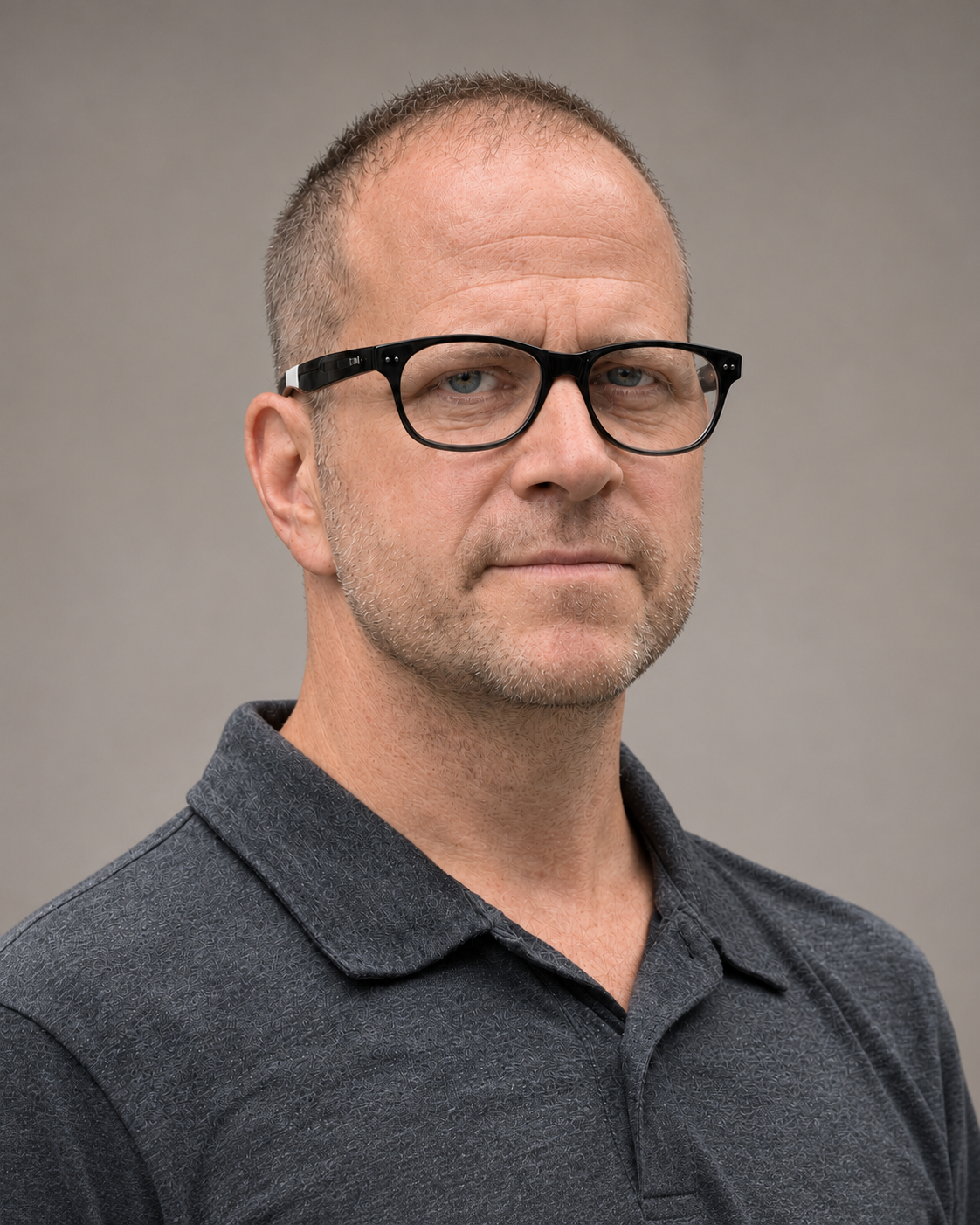
Michael McWatters
VP, Product Design · HBO Max
Michael is a design leader, writer, and photographer. His career spans product design, UX, content, and creative leadership, including leading experience design at TED before HBO Max. He brings a perspective shaped by curiosity, collaboration, and making things useful for people.
Role reflects the introduction at the time of recording.
More from Michael
Writing on design and creative work ↗
Explore Michael’s essays on design, leadership, and technology.
A note to those considering design leadership ↗
Further reading on leadership as a creative practice.
Photography on Glass ↗
Follow the photography Michael discusses at the end of the episode.
EVERY WORD, AT YOUR PACERead the Full Transcript
Transcript exported from the edited episode. Michael’s name has been corrected; timestamps include the intro music. Automated transcription may contain other errors.
[00:00:10] Nick: Hi, this is the UX Growth Podcast, a podcast that helps people learn and grow in the UX design industry. I'm your host, Nick Mann. I'm here with Michael McWatters, VP of Product Design at HBO Max. Michael, thank you for being here.
[00:00:24] Michael: I'm really happy to be here. Thanks for having me, Nick.
[00:00:27] Nick: Yes. I'm excited to dig into your career and how your perspective on design has evolved over nearly three decades.
[00:00:34] So let's start from the beginning. How'd you first find your way into design?
[00:00:38] Michael: It's funny. I studied fine art in undergrad, and then I doubled down and decided to get a Master of Fine Arts degree, and then decided after that I didn't know what I was doing and I didn't know why I had done that.
[00:00:48] I didn't really wanna be a painter even though I had some gallery interest and everything, and I went home over a long weekend and I thought about it, and I realized that what really motivated me was making things for people, that the act of creation- ... was exciting and not necessarily just creating things that people use.
[00:01:04] Of course, as you noted it, it's been a long time since I started. So back then UX was barely a thing. I think Donald Norman had just coined the term user experience, and I didn't really know about that, so my first design job was very unusual. It was actually working for a laser light studio doing animations for movies and TV shows and rock concerts.
[00:01:23] But it gave me a taste of kind of creating experiences for people. And while I was there was also handling that company's marketing and so forth, and we hired a company to build our website, and that was very intriguing to me. I knew, I was using the web early days, but I was very interested in the idea that I could actually create something like this myself.
[00:01:41] Has taught myself to code badly design maybe better, and write a little bit. And in those days, if you could do those three things, you could write your ticket to some extent. And so the first time I ever published a webpage, I said it was one of those rare moments in my life at least, where I knew this is what I wanted to do.
[00:01:55] It was very clear to me I wanted to be part of this, I wanted to be part of this ecosystem and building things like this. And so in those days, it was like digital media, new media. We had all these funny terms for it before user experience or product design was anything anyone talked about.
[00:02:10] And that's been the through line. However, along the way there's been many pivots. I used to think I was a little bit of a dilettante because I'd gone into studied motion design, HC... I led an HCI practice at one point, UX, brand design, and all the way across the gamut.
[00:02:26] U- led UX writing practices and content design. And then I realized what happened was, in retrospect, it wasn't that I was a generalist across a bunch of areas. I let my curiosity drive me, and whenever I got curious about something, I decided to dive deep into it rather.
[00:02:40] And that I say would be the probably the most common through line that I've seen from my career, and also just design writ large over the last, two or three decades, is that there is no common like set of tools that we use, the paradigms change, everything is as we know now, tipped on end every five to 10 years.
[00:02:57] And that's been exciting for me. That's kept me engaged.
[00:03:00] Nick: Yeah. I think that's really incredible, and I really like that use of c- curiosity because I think that's like a very key skill that has designers be able to grow within their career so much because there's always this constant change in what we are learning and how we're adapting.
[00:03:17] Because it, it's never like you designed one thing and that's just how it will always be. There's always gonna be some reiteration. There's gonna be some redesign. There's gonna be somebody that just throws away and makes something new entirely
[00:03:30] Michael: That's true. I think again, in the early days, the things that I was working on, whether they were print or actual multimedia laser shows, it was like a one-hit deal.
[00:03:40] If you've ever done a big print run and then found a mistake when it comes back, it's terrifying. And that was one of the things that I guess felt like a, an easy out with the web, was you could publish something and then revise it and then iterate it. And then that kind of became not just an escape valve for decisions that you might not have made or mistakes that you may have made, but also product evolution.
[00:03:59] That was encouraged, and then came along Agile, and that kind of became the way we all worked. So that iterative process, I don't know, it seems to really s- serve my personality. I like to always be iterating and refining.
[00:04:10] Nick: So what would you say was a mistake that you had early in your career that you think younger designers can learn from?
[00:04:18] Michael: So young and... very early in my career, as I mentioned, I wasn't sure what I exactly wanted to do. And when I mentioned that laser light job, there were two opportunities that came up at the same time, and I won't describe the other one for confidentiality reasons. But in hindsight, it was an opportunity that probably would have jettisoned my career even further faster and maybe in an even more interesting way.
[00:04:43] I love telling that story, s- that I started out in laser lights. But- ... the job that I ended up taking had some health benefits and a stable work routine and seemed a little bit more solid, which is what I was craving. The other opportunity came with more risk. It was a 90-day contract.
[00:04:59] They weren't offering health insurance, but the work was really cool and played into some of my strengths. I ended up, for a variety of reasons, taking the slightly safer option, although in design, safe is relative. Yeah. In retrospect, yeah, in retrospect I really wish I had taken that risk.
[00:05:16] And so kind of one of my bits of advice that I give designers, and really anyone but in particular designers, is your appetite for risk the ability to take risk just naturally declines over time. You take on more life responsibilities family and other responsibilities. So take the risks you can early on 'cause you're not gonna, you're not gonna find it easier to take risks as time goes on.
[00:05:40] So I, if I could go back to my earlier self, I think one of the, most important things I would've told myself would've been, "Take this risk. Don't play it safe right now. It's not gonna get easier."
[00:05:50] It's interesting because people in my family and some of my friends think that I've taken a very risky career. After that laser light job, I went to work at a small startup in Venice and where I led a interaction- ... design team at that time, and I didn't have any...
[00:06:01] I shouldn't, wasn't really qualified to lead a team of designers building websites for big companies. But and it seem- it seemed less risk-averse in some ways than the other option. But you're right. I think sometimes we also just have risk thrust upon us. Like at the tail end of the dot-com crisis, I was laid off from a job that I thought I was gonna make it through the, we'd make it through that kind of period.
[00:06:21] And in retrospect before I even collected my first unemployment check, 'cause in New York at the time it took six weeks to get your first unemployment check, I had bagged a pretty good freelance gig with an agency, and that led to a whole bunch of other opportunities. And to me, it reinforced that although I didn't decide to take that risk, I had the risk thrust upon me, like sometimes you can capitalize on risk, and if you see the risk and you can actually capitalize on it ahead of time, that's a good thing to do
[00:06:46] Nick: Yeah, I do wanna note the fact that you're now leading a team of other designers, and I feel like there's... You mentioned how it feels risky because you'd never done it before. Like, how do you actually get ready to do that? I don't think you do because it's not like you can just go to school for that.
[00:07:03] Michael: No. In fact, I was just talking to a, a young product manager today who asked me at, "At what point do you know when you're ready to lead other people or be a manager or whatever?" And I- ... for me it started to happen when I couldn't scale my own work, and I really realized that if I could find other talented people to help me, whether it was in an agency and then later in-house, I could do more work.
[00:07:25] But I would, if I'm honest, I would probably say I wasn't the best manager at that time 'cause I was young and didn't understand my own ego and what I was trying to do. But-
[00:07:34] ...
[00:07:34] Michael: If you are curious, coming back to our first point about yourself, not just the world outside, and you try to learn and you try to take feedback, I-
[00:07:41] Nick: Mm-hmm
[00:07:41] Michael: um,
[00:07:41] I started to look at the people who I thought were really good leaders in the studios and what they were doing, and I also read a little bit. I learned at that point about servant, a thing called servant leadership, which you've probably heard of it, but I hadn't at the time. It's a model for for helping people,
[00:07:56] um-
[00:07:57] Nick: Mm-hmm
[00:07:58] Michael: I
[00:07:58] guess, like manage, manage themselves more and lean into guiding, growing people rather than growing work. And that was a real epiphany for me. And it just started to naturally evolve over time, and I'm always checking myself and getting, asking for feedback and trying to make sure I'm doing things the right way.
[00:08:17] And I'm sure I'm not a lot of the time.
[00:08:19] ...
[00:08:19] Uh-
[00:08:19] Nick: Mm-hmm ...
[00:08:20] Michael: But
[00:08:20] I think,
[00:08:20] I think you're right. It's not one of those things you can just
[00:08:22] kind of
[00:08:22] say flip a switch.
[00:08:23] And,
[00:08:23] And for a lot of designers, and in these days it's easier, I don't think you have to go into people leadership, by the way, to grow your career.
[00:08:29] When I started out, it was a cap. If you weren't gonna become an art director, a creative director, or something else, you were blocked, and now that's really not the case
[00:08:36] Nick: Yeah, I agree with that a lot because now there is more room for how you actually want your career to be, and especially more opportunities to create the career that you want because there's so many people who are choosing to leave UX because of that, and I'm like, I'm curious to know your thoughts on that, especially because you've been in it for so many years.
[00:08:56] Michael: I'll answer the first part and then come to the second part- Okay ... if you're in a place where that is you're in-house, you're in a studio, and they have...
[00:09:02] They don't have a dual track like an IC or an independent individual contributor track and a people leader track- ... maybe try to find a place where they do because I don't think that everybody should go into people leadership. Doesn't mean you're not a great designer, doesn't mean you're not a great leader of projects, doesn't mean you're not a great leader of people through projects.
[00:09:20] But being a manager or having direct reports is a different thing because you're also on the hook for their creative and personal welfare, not just- ... the plans of the work. So I would say if you're feeling blocked and burned out because you can't advance because you wanna continue being an IC or you don't see a management track, that's probably an op- a, a signal to look elsewhere As far as like the, the burnout thing goes it is a tough time and now we're just inundated with the latest wave of, AI and everything is changing and what are you gonna do.
[00:09:49] And I have two quick thoughts on that. The first is, like I said, I've always been curious and if you can find it in yourself to be curious, if you can stir your curiosity and open yourself up, you're gonna do a lot better than if your instant response or your natural response is to shut down at change, right?
[00:10:05] So I think- ... that's a thing to check yourself about. But it's also like kind of a reminder that, as I said, everything changes every five to six years. When I started out we were like working right in the text editor, designing in code, and then we were designing in Photoshop, and then we were designing in other tools- and then Sketch and then Figma, and now, you're prompting your designs to some extent. But at the end of the day, if you're not curious about the work you're doing, the problems you're solving- ... the challenges you're facing, forget the tooling. That's just a new thing to learn.
[00:10:34] If you can't get excited about that, then maybe there is a good reason to kind of pivot. And I'll say that I've always been open to talking to to people who want kind of career advice. But about four or five years ago I started to get outreach from older designers, people who are close to me in age or maybe a little bit younger who are and one person who's actually older. And it was because I was posting on LinkedIn and still excited and they said "How are you still at this point engaged? Like I'm losing my mojo. I just don't feel it." And kind of the the thing that occurred to me was I got into design 'cause I like solving problems, and the problems haven't gone away.
[00:11:09] Whether it's helping a person actually do something important or meaningful or useful, or just helping them enjoy life a little bit better like we get to do where I'm at HBO Max it's that problem-solving part that keeps me going. The problems don't end, so it's an endless stream, and if that's how your brain is oriented probably harder to burn out.
[00:11:27] Nick: So Michael, what gets you excited to come to work today that you may be different from what excited you earlier in your career?
[00:11:34] Michael: Yeah, I think earlier in my career the focus was very much on the thing I was going to make that day or that week or that month, the actual project. And to be clear, the projects are still very exciting to me.
[00:11:46] I love the problems that we're trying to solve.
[00:11:48] But what gets me excited is I've got a great team right now. I love these people. They're super talented, they're super passionate. And they're all very curious and hardworking. And it's an interesting team with a very varied blend of talents and skills.
[00:12:01] And so I get really excited about seeing what we're doing together to just literally coming in and talking with them and working through the problems and trying to clear blockers for them and create moments of inspiration to help them and to partner with across the organization with my engineering and product partners.
[00:12:18] For me, design is the process of solving many problems, and so part of those problems come through the lens of the work and the projects we're doing. Some of those problems come in the form of helping to evangelize what we're doing across the organization or with other partners in other parts of the organization helping them do things that they're trying to accomplish raising awareness of my team and what we're doing.
[00:12:40] So for me, the thing that keeps me, looking forward to coming in is kind of the human problem. What are we trying to do together? How can we help other people within our organization, and how can all of us together help our users or our customers at the end of the day?
[00:12:52] Nick: Yeah, there, there's a level of like we need to remember why we are doing our work that's outside of ourselves because we are improving people's lives and enjoyment. Like I can say that I love HBO. I love your content. I can say firsthand as one of your users, actually.
[00:13:09] Michael: No that's good to hear. I'm really happy to hear that. This problem in streaming of like connecting people to what they wanna watch it's not gotten easier. It only gets harder for a variety of reasons and there's still a long way to go. But at the end of the day, I've been very fortunate that like for the last almost seven years I've gotten to work here at on the HBO Max product a product I use and love because of the content, the great stuff that we have.
[00:13:33] And prior to that for almost eight years at TED, I was a big fan of TED Talks for many years, and so actually getting to lead experience design there was a real thrill. So I've been very fortunate in that regard and I'm very aware of that. But Yeah, it is also funny sometimes to sit down in front of the TV and fire up HBO Max and look at it and see all the kinda little, points of things that I wanna fix, but also kind of- points and things that we've already fixed or that look really great and are working really well. So it's something I interact with every day, and that's not something you always get to do in design.
[00:14:04] Nick: And it's funny, do you ever get like, it's so nitpicky, and no one ever talks about it or even cares.
[00:14:08] I- is that ever with you?
[00:14:10] Michael: For sure. There are absolutely a million things I look at and I'm like, "That... Why is that working that way? Why did we design it that way?" The truth is, it's usually the inverse though. It's usually people telling me like, "Why did you guys design th- they that way?" Or they don't know because, they don't know all of the constraints.
[00:14:25] I have a, a one of my my, my design partner at TED, he wrote a piece, and I'm gonna terribly misquote it, but it was basically like, designers should be easier on one another because when you're looking at something in the product experience, the work you're seeing is the output or the, is the result of so many constraints that were beyond the designer's control.
[00:14:43] Technical constraints- ... budgetary constraints, whatever, platform constraints, timing constraints. But that doesn't, that's, the majority of what I get is "I really wish you guys had designed this differently." And I'm like, "Yeah, me too." But yeah, I definitely open the app every day and I'm like, "Oh, we gotta..."
[00:14:58] And I'm not talking about just bugs. I'm like, when are we gonna get around to getting that little thing fixed? But that, that's not a bad thing. That's, to me, that's, that means there's always something left to- ... working on. We're never gonna hit an end state in this sp- in this field.
[00:15:10] Nick: Oh yeah.
[00:15:10] S- whenever a big company does a logo redesign, and everyone has- Oh, God ... so many opinions- Yeah ... and feedback on it. And it's just like I'm pretty sure the designer wished they could do what you're saying, but if you knew the horrors they had to deal with.
[00:15:24] Michael: Oh, yeah. Yeah. Oh, when we went from HBO Max to Max back to HBO Max, it was like people were like, as though I had personally driven all of that decision-making myself.
[00:15:33] I was like, "No." We're all, it's a, it takes a village.
[00:15:36] Nick: Oh, yeah. Yeah. No I'm imagining all the stuff that came with that, yep I know. I'm curious to know, what is your definition of strategic design?
[00:15:46] Michael: So I, I really... I've quoted this so many times, I should remember who to attribute or attribute this to, but it was somebody who said, design is strategy visualized. I, I have it off the tip of my head, but regardless we can put that in the show notes or something. Okay ... and I love that, design is strategy visualized.
[00:16:02] I take issue with the word visualize because it's so specific to visual design, but I I take it to mean made manifest. So for me, w- I had visions at one point in my young life of like going into something like the sciences or architecture, industrial design. In fact I studied a little of each.
[00:16:17] And as I said, I was a little lost and ended up in art and then design. But when I'm, when I referenced that moment where I decided I wanted to make things for people, it was that people would interact with. What occurred to me over time was that it was because there's a strategic element to that.
[00:16:31] There's a problem-solving element to that. And the thing is, the strategy isn't just a big thing, right? It's not just the strategy of this new product, right? The strategy is literally down to the interface element. Like we design for what are called connected TVs or CTV devices. It's maybe one of the most kinda constrained experiences any designer can go through because it's gotta be readable at 10 feet, but it also has to be interacted with a remote that has anywhere from 70 buttons to four buttons, all hardware, and the interaction, you always have to have a focus state, so you have to move from one element to the other, and these devices are often not very well... They're kinda low powered, right? So there's a lot of constraints, and that means you have to make a lot of like strategic decisions about what you put in the interface, what you leave out of the...
[00:17:18] more important, what you leave out of the interface, the order of things, and all of that has to be balanced against what you think the user intent is, what they're trying to do in that moment, what you hope that they do. And so if you're not interested, if you as a designer are not interested in just constantly solving that problem, those little micro problems, and then laddering that up to a bigger problem and asking like, "Why are we doing this in the first place?"
[00:17:43] And then once we get to how, we start to get into the knits and gnats of it. Then design does become a lot more of a chore and less exciting, but if you can constantly like be for me, like challenging your brain to think about each and every interaction big and small, I think, one, you'll be a better designer and create better experiences.
[00:18:01] But two, I think you'll just be happier in the long run
[00:18:04] Nick: Yeah, I know. And happiness is that is such a underrated process that designers don't really think about when they're starting their career, 'cause it's something that it matters more the m- the higher up you go in the chain because it becomes more responsibilities, less stuff.
[00:18:22] A- and you can forget, like, why you even started design because of that.
[00:18:26] Michael: Yeah. I when I found out that, I don't remember the number, but I wanna say it was $12 an hour plus overtime was my first design job, and the fact that I was just gonna get paid to design, I was like- ... I remember hanging up the phone, and even that is like hanging it on the wall, 'cause a wall phone.
[00:18:42] I don't wanna, I don't wanna suggest I'm cool here, but like literally, and dancing around my living room going, "I'm getting paid to be creative." So like for me, it started with a moment of joy "Holy smokes, I can actually have a job that-" Yeah ... not, I had worked in a bank while I was going to grad school, and nothing wrong, no, not casting any shade on working in a bank, but like I, that wasn't for me.
[00:18:59] I was gonna get paid to make stuff. I couldn't believe it. So it started out with joy, and then, over time, like you're saying, it got rough because m- like you start to think about... first of all, if you're going through something like the dot-com crisis or the 2008 financial crisis where everybody's losing their jobs, that's existential, and that is real, and there's no reason not to be upset about that, and angry, and question your life choices.
[00:19:21] I get it. But if you can then reframe in the moment that you're actually at your desk doing the work or in a team meeting and go like, "What, look what I'm getting to do. This is fun. At the end of the day, we're doing fun stuff." And not all design is fun obviously, but at the end of the day-
[00:19:35] Still like you're getting paid to solve problems that people have and that's should provide you some meaning or some fulfillment. Yeah I think it's it is an arc, and there's days that I'm not happy. I'm not meaning- ... like there's days I get frustrated, but I always try to reframe and remember why I'm doing what I'm doing and remember all the great things that come along with it.
[00:19:54] Nick: Yeah, and I think, and like one thing that a lot of designers frustrate for- with is get, like, breaking into the industry. Yeah. I think, and definitely feels like it's at the all-time hardest, even though maybe after COVID was harder than it is now, but still pretty hard. So I'm curi- I'm curious to know your, your thoughts on designers that, how can they make sure that they become the best can that they can possibly be?
[00:20:26] Michael: Wow you should ask me a harder question. That's a, that is a really hard one to answer. I gotta tell you, in the last three years I'm sitting here downplaying the AI stuff and all of the zeitgeisty kind of angst that's going on. Meanwhile, we're embracing it, but also fighting with it, so I'm not minimizing it.
[00:20:44] Uh,
[00:20:44] But if you had asked me three years ago, I'd have very... I think I'd have pretty stock and solid answer I could give you, like focus on your portfolio,
[00:20:51] you know.
[00:20:52] Nick: Mm-hmm.
[00:20:52] Michael: try to find a blend of a big name company or really great work or, if you're lucky, both. I like the big name company because, obviously if you've got a great company on your resume, that may open more doors.
[00:21:04] But be careful, because if you're at that big name company not doing interesting work that you can put in your book that may not be the right thing. So it's that combination. That was my standard answer, is focus on both your kind of professional resume and your portfolio always.
[00:21:17] Now it's much harder. I don't, I can't be as sanguine, I can't be as confident in saying you should enter this profession because, there are a lot of risks right now. There are a lot of kind of barbarians at the gate who wanna take over design. And look, I think it's great that we should all be collaborating in this space and, it's great to democratize the kind of creation and ideation of things, right?
[00:21:37] I still fundamentally believe that there is expertise, and I don't just mean craft expertise. So you hear a lot of designers talking about craft, and I'm, I come from a time of craft, right? As I said- ... I was a painter and then I learned, all the stuff I could about HCI and UX and, you know, even code and I believe in that stuff.
[00:21:54] But at the end of the day there's just a thing that y- as a designer, a, a domain expertise that's in your brain. It's some combination of a curiosity, empathy, a knowledge of the kind of heuristics and laws of UX and product psychology. Having a maker mentality. Just somebody who builds stuff and understands the process of how humans navigate and use things and really building up that intellectual capability, that it's not just as simple as prompting something into existence. There's a million choices to be made. So if somebody was, like, literally gonna break into, say, I really wanted to break into design right now, I'm... Of course, I would say be good at the tools, be good at the craft, be good at all the things.
[00:22:34] But I would also say really focus on the things that make designers different that can't be claimed, that can't be territory claimed by somebody else from another experience. The same way engineers have their domain expertise, product managers, marketers. There is industry expertise that you get that is some part of education, experience, innate knowledge, talent.
[00:22:55] And if those are the things you're interested in cultivating as a designer, do that.
[00:23:01] Nick: And if someone doesn't have a recognizable company or school on their resume or portfolio, what else would you suggest they should do?
[00:23:09] Michael: So this is the standard advice, which is build something for yourself, right?
[00:23:13] And, that was there was the age of I'm gonna redesign Spotify. I saw a lot of portfolios of people who were like, "I'm redesigning a weather app. I'm redesigning Spotify." And it was cool. Look, there was some gatekeepers who were like, "I don't wanna see that in your portfolio."
[00:23:23] I'm like, "Look." But I will tell a story about a designer that I interviewed many years ago who came in, and he, and his work was good. It wasn't great, but it was good and he could tell my reaction was a little bit just like the agent said. I wasn't like, "Oh," and he said, "I do have something else that I've got, and but it's not
[00:23:39] I didn't do it at work, and I didn't do it in school." I'm like, "Show me." And he sh- brought up this personal project that he had, and it was so cool. It was like a n- Again, I'm going back many years, but it was like a news aggregation idea and it was a functioning prototype that he built.
[00:23:51] And I'm like, this just blew my mind. I'm like, this is really good thinking. He pulled out all the stops on his creativity and his ability to execute. And we hired him, and he's now, a very successful designer in his own right. And I'm still in touch with him, so I know that.
[00:24:04] I would say now, crafting things is even easier. You can ... If you've got an idea, you can build it and you should. But don't just craft another dashboard with, a sans serif typeface, right? You should be actually using these things to create something which really makes evident your perspective and your unique values and traits as a designer.
[00:24:24] If you don't have a big name and you don't have a big portfolio piece you've worked on then I would say supplement with something that is your own making. Or, go find somebody who wants a product design and I know that's hard. That's almost sounds gatekeepery in its own ways.
[00:24:38] Yeah, work for free, but it is true. There are people, there's nonprofits, there's things you might actually be able to help now. And at the end of the day, for me, when I'm looking at a portfolio,
[00:24:48] I don't, you know,
[00:24:49] I don't really like to look at resumes or jobs. And in fact, a few years back, I implemented here, I asked for our recruiters not to s- tell me names or companies or education 'cause I really just wanted to see the work, so they would try to black that out a little bit.
[00:25:03] And so at the end of the day, it's the work. And then if the work is intriguing, then I wanna know more about the person.
[00:25:09] Nick: Oh is that because that creates a bias to you?
[00:25:12] Michael: I think we all wanna think we're unbiased, but we're not.
[00:25:13] Nick: Oh, yeah, absolutely.
[00:25:14] But you know- We're
[00:25:14] Michael: not, you know ...
[00:25:15] Nick: it's, it's naturally gonna happen. It's natural. Yeah.
[00:25:17] Michael: And so I just wanna have as little ... I just really wanna focus on what they've done. I'll read a, I'll read, a bio or something like that, but I'm trying to be careful not to say ... 'Cause actually I'm not somebody who thinks a better school means a better designer or a better company means a better designer.
[00:25:29] Sometimes it does and sometimes it doesn't. I just don't wanna, I just don't wanna open that door.
[00:25:34] ...
[00:25:34] Michael: Or have an anti-bias, 'cause I didn't go to a big design school. Am I gonna look down on somebody who did? I don't wanna be that way either. I don't wanna be, a- That's true
[00:25:40] inverse snob. So I just really wanna focus on the work.
[00:25:44] Nick: That makes a lot of sense. And I get where you like you don't wanna come off all gatekeeper-y about certain projects, especially if it's like the same ... oh, like another weather app, another Spotify redesign. Yeah. I I, like I get why that happens.
[00:25:55] I get why do you wanna do that. I think it's also like the ... I think what the issue is that they're not thinking about what is it the kind of work that they want to do, where do they see their careers going instead of saying that "Can I do this?" You need to be
[00:26:12] Like, I always say to a lot of designers who are redesigning their portfolios is like to think further along of where you want to show this, where you wants to be so that you can now show off the work that you are actually now doing into your portfolio. And, and it's, it doesn't really come natural to a lot of designers because there is a little bit of the future that you wanna try to anticipate.
[00:26:35] And even if the future doesn't happen exactly where you wanna be, there's, still some direction about it
[00:26:42] Michael: I mean, yeah, I think you're making a really good point that I should probably have honed in a bit more in my response, which is if you are a hardcore, UX designer, for example...
[00:26:53] I'm I wanna be clear, when I say a great portfolio piece, I don't mean something that's necessarily whizzbang animations and whatnot. If you're a hardcore UX person, maybe the portfolio piece you wanna do is take a product you're passionate about, do a teardown of it a detailed teardown, and then rebuild based on what you know your own heuristics and knowledge and expertise, and that could be a case study, right?
[00:27:13] If you haven't done that. If you wanna be a visual designer or an interface designer, then maybe, you either design something net new or take something that you think is a great product but could be made much better. Again I think there are people who look down on that kind of exercise.
[00:27:26] I personally don't because frankly, that's a lot of what you're gonna get hired to do. You're gonna go- ... someplace like Spotify and they're gonna ask you, "How would you improve our product," right? And so I think- Yeah ... there is a value in that. But to your point, I wouldn't wanna see 1,000 Spotify apps if people are trying to apply for a job in banking, for example.
[00:27:42] You should probably to some extent target where you wanna go. If that's where you wanna go, you're interested in financial services or fintech dashboards, maybe you should think in that space in terms of what you put in your portfolio.
[00:27:52] Nick: Or you can even reframe what was the problem that fintech had also identified too.
[00:27:58] Michael: Exactly.
[00:27:58] Nick: There's always things that you can... you don't have to completely change the project if you're completely, going a different direction too. Like- Exactly ... there's always different things that you could do. And so many designers like to overthink it.
[00:28:08] That's,
[00:28:10] That's the problem- Exactly ... is you're overthinking it so much. Also I really wanna say because I love talking about portfolios. It's probably my favorite subject for regarding UX. I also really wanna note to the listeners that a very important thing about s- making self projects is also document your own constraints.
[00:28:26] Where were the challenges you had with it? Because even though you aren't working with a boss and they have their own constraints that they're pushing onto you for whatever reason that doesn't mean you still have constraints of yourself that you can still show off too. So I think that's also very useful.
[00:28:41] Michael: I'm really curious about that 'cause I have a thought but I wanna hear, can you describe a little bit more what you mean by- ... demonstrating a constraint?
[00:28:49] Nick: Yes. Finding out what is it that you can and can't do. What were the... if for example what's a amazing thing that you would wanna do if you had more time to do it?
[00:28:58] If even if you had your own budget to be able to outsource something. I think there's always something that you could do something better but, like, why didn't you? And you can answer that.
[00:29:09] Michael: 100%. And in fact, I think that's one of the things that, Look, we love, as humans we love drama, right? We love to hear the pain.
[00:29:15] And it's funny because sometimes I've seen case studies where they're doing exactly what you're describing. They're setting up a real problem that they faced challenges and constraints, and acknowledging that where they landed may or may not be where they wanted, but describing the ideal state or their thought process through it was really meaningful to me to get to know them.
[00:29:35] And also at the end of the day, and this is the maybe you speak this truth it's not generally spoken much about, people aren't spending a lot of time on your portfolio, right? They're not. It's the first pass to get you to the next step.
[00:29:47] Nick: Mm-hmm.
[00:29:48] Michael: But I think a lot of people will tell you that you've gotta just have this really incredibly thick, dense portfolio, and I'd rather see one or two really meaningful pieces than 10 half-baked case studies.
[00:29:59] Nick: That's true. And also regarding the hiring process now, like now that AI is also involved into that, so I'm curious to know like what are your thoughts on that?
[00:30:09] Michael: Ah, man, fortunately or unfortunately we haven't we're not in a big hiring mode right now, but I really ... I haven't seen that here, but I do know a designer, a friend. This is a terrifying story. She, Oh,
[00:30:21] Nick: man ...
[00:30:21] Michael: she was interviewing with a screener.
[00:30:24] You know,
[00:30:24] A screener for those that don't-
[00:30:25] Mm-hmm
[00:30:25] like the first HR person or somebody like the first pass of
[00:30:28] like
[00:30:28] do you meet the... In big or really big organizations sometimes
[00:30:31] like
[00:30:31] t- like just a litmus test, are we gonna move them even to the next level of like design recruiter. And at the end they said, "Do you have any questions for me?" And she said, "Yeah."
[00:30:39] And apparently she asked kind of an intricate question. He said, "Hold on, let me get you a human agent." And she realized she was- ... talking to AI that time. Oh. And I'm just like, what? No. I think there's laws that mean they have to disclose that, but that is a terrifying future. And listen, I wanna be clear.
[00:30:53] I love this stuff and I'm embracing it and I'm all in, but you gotta be clear with people, and there's the human element that I just don't fundamentally believe we should we should be replacing or moving the needle on. I keep saying we're using a ton of this stuff here where I am, but my one bright line is we never let it do any thinking for us, right?
[00:31:12] We'll let it help us research. We'll let it help us, let it help us solve a problem. But we're not... I don't wanna prompt something and go, "Create this feature." I'm still finding a lot of the upfront thinking takes as long as it always did.
[00:31:23] And that's important 'cause we should be solving the problems.
[00:31:25] I know I'm going a little bit far afield here from your hiring question. Go ahead. But it is kinda related. It's like I think some things still need a human element and we shouldn't shy away from that. That's important.
[00:31:34] Nick: Yeah, don't worry.
[00:31:35] I actually think you were definitely gonna be talking about something like this as well. But the way you presented that break caught me off guard.
[00:31:41] Michael: That
[00:31:41] Nick: was like a- ...
[00:31:42] Michael: terrifying story ...
[00:31:43] Nick: Like that is like a jump scare.
[00:31:45] Michael: Yeah. If she was jump scared, she had no idea. She just was so freaked out.
[00:31:49] And in fact, I think the rest of the thing didn't go well 'cause she said, "Why did you put me... I didn't know." She was so like a, a- off-put by it.
[00:31:55] Nick: Oh, man. Y- yeah, there are definitely probably some legalities about not letting the interviewee know that before ahead of time. That's- Yeah ... feels wild because like I've heard the reasons why some companies do that, and I'm also curious to know your thoughts on it, is they do this so that they c- have more applicants be able to have their say in the hiring process apart from just applying.
[00:32:21] Michael: So you mean you think it's like a scale, they're saying it's a scale thing, they can interview more applicants?
[00:32:24] Nick: Yes.
[00:32:25] Michael: That's a charitable read and maybe that's true. Maybe it does open the door to more applicants. Maybe it reduces bias. I'm not convinced that's the case.
[00:32:33] I don't have the evidence, so maybe that's the case. That's a charitable view. I think, I was just having a conversation with one of my UX research partners on this, and there's an area where like more and more companies are saying, you should have moderated interviews."
[00:32:46] Not just, surveys and forms, but actual moderated interviews with AI. And, I get that because if you have an AI moderator, you can, instead of being constrained by 10 participants, you might be able to scale up to 100 participants. And, forgetting the rule that like maybe five or 10 participants is all you need to spot a trend line it, there is an argument to be made that kind of democratizes your research.
[00:33:07] I, again, in the spirit of having been a dilettante, I had to do a lot of my own UX research, and now I'm fortunate to have good UX researchers, and I know what good moderators do. They are like a psychologist. They're reading, context clues. They're reading body language.
[00:33:21] They're adapting their questions to the person. They're in the room with them or on Zoom face-to-face, and they're making these connections and drawing out things that you, that an AI can't do. It can replicate that, but it's not gonna be the same thing. And the messy middle, that kind of messy bit that humans get that's imperfect, is actually important.
[00:33:40] It's like evolution makes mistakes, and that's how things kind of evolve. It's to some extent like humans make mistakes and we're fragile, but that's also what makes it work in some level.
[00:33:52] Nick: Y- yeah, I, there's always gonna be some natural problems because of that bec- like co- context is really everything with AI right now.
[00:34:00] Michael: Yeah.
[00:34:01] Nick: Yeah, I know and it's we're going through a weird phase where we don't know what is the best way to go about anything with AI now.
[00:34:07] Michael: Yeah.
[00:34:08] Nick: Definitely, it is the Wild West, and unfortunately, bad, fort- fortunate things are gonna happen because of that.
[00:34:14] Michael: Yeah, I often say it's good to have an ethical or moral compass when you start, because then you see many more areas where you can start to adventure- you know, venture into with AI, 'cause you're like, "Oh, this is a safe space. This is really cool. Let's do this. Let's do that." But you also kinda know the walled gardens, the places you don't wanna go, because you've got your own kind of, ethical compass that you just aren't willing to sacrifice or, you're not willing to give that up.
[00:34:37] It points you away from it. So I think starting, if you're starting to think about these things and using them, or you're well into it, I do think defining if you were applying these rules to another person, or if you were watching somebody else do this, or you were giving advice to somebody else, what would you say?
[00:34:54] What would ha- be your advice how they should approach these things?
[00:34:58] Nick: Yeah, no. But also with AI is what you are most excited about it
[00:35:04] Michael: In terms of process, I'm very excited at how we are able to... as I mentioned, the process isn't going faster overall per se, and part of that's because these tools are nascent, and evolving.
[00:35:16] We're starting to do a lot of the upfront thinking, or we should be doing a lot of the upfront thinking. But I am excited about the fact that we are able to ideate in a much more rich and collaborative way more quickly. We can bring more people, we can bring engineers and product managers into the mix, and all kind of collaborate together in a way that before the tooling kind of prevented.
[00:35:35] So I'm very excited about kind of the generation of ideas or the cultivation of ideas that this is e- enabling. I am also very like keen on solving problems, in particular with LLMs, but how we can i- in our space, in the streaming space, we try to- ... personalize and make recommendations.
[00:35:54] And the way that's been done is by putting a tile in front of somebody. But there's no context around why we're making that recommendation to you in specific. And you can't have a human agent doing that for millions of customers, so how can we unlock what we know is buried in an algorithm and hidden in the context of the content itself, and what we know about you as a user, like what gets you excited?
[00:36:15] These things can unlock a lot of potential, and whenever I see it in another field where somebody's doing something that like allows you to have,
[00:36:23] uh...
[00:36:24] It's
[00:36:24] kind of
[00:36:24] ironic compared to what I just said earlier, but a more human experience. But as a user, it's actually humanizing for me. I'm getting in touch with this experience in a more meaningful way.
[00:36:34] You hear people... it freaked me out when somebody started talking about they were chatting with ChatGPT last night. One of... oh, I had a whole conversation with ChatGPT. And it's still weird to me to say that, but it's true. Sometimes I'm in there and I'm actually like going back and forth and working through a problem.
[00:36:48] It could be planning a trip. It could be solving a creative problem. That kind of co-design experience. I make no mistakes that I'm talking to an LLM and I, the results I'm getting- ... back are, some model of like predictive, data and, crazy hallucinations. But it is also, in a weird way, it's like therapy where the what you, what really matters is what you say, and then you hear it back to you.
[00:37:09] So that experience is something that no tool has really unlocked yet. And and I think of these things less as a tool and more as like a medium more like a, a place to work in. And so I think that's what gets me excited is the newness of it all. It's like how the web felt.
[00:37:23] And at the same time- No conversation about AI is ever simple or one-dimensional. In the early days of the web, most people were very excited. There was a little bit of trepidation, and when Flash came along- ... most people... I went to a big Flash conference. Everybody was just stoked to be able to animate and have sound and video in a browser.
[00:37:38] And now you're, like, almost forbidden from saying you're interested in AI unless you also say, "I'm also terrified by it." So I want... My caveat is I'm fascinated by AI and terrified by it.,
[00:37:48] Nick: So Michael, if you were starting your design career again today, knowing everything you know now, what would you prioritize differently?
[00:37:56] Michael: As I said, I would prioritize risk-taking for one thing.
[00:37:59] I would probably, if I could, if it was financially feasible and I would probably be more open to risk and pursue something a little bit more, Again, I loved my first job, but I would, if there was an opportunity that seemed a little higher risk, I would hold out until I could do that.
[00:38:18] And then I think the other thing I'm actually trying to think back on, like- I- if I could go, if I was a young designer starting today, I think you know what? I wouldn't necessarily... This is gonna sound crazy compared, based on what we were just talking about. I don't know that my first step would be to go out and try, cursor and mock things up.
[00:38:40] Definitely do. Definitely get into Figma. Definitely Figma make, definitely start designing. But I would, as much as possible study the kinds of problems that we're gonna be solving as designers, which I think are business problems, human problems, psychol- understand psychology, sociology understand the mechanics of business and industrial psychology.
[00:38:58] It sounds crazy, but become a student of the world around you. That would probably be what I would do, and I did do that, but I don't think I did it intentionally. I, one of my, one, when I was talking about that laser light company we got a gig for the NBA whatever anniversary they were having to do a, a light show for them, and I started animating and the art director came in, he was a brilliant guy, and he said, "What are you doing?"
[00:39:18] I said, "I'm animating." He goes no, we go to the library first." Again, this is "We go to the library." He's like, he's "We need to get all the books on basketball and the NBA as possible," right? I'm like, "What? What? I know basketball." He goes no. You don't know the history of the NBA." And that was a lesson for me as a young designer be- if I'm gonna design something good, even if it's a light display, we need to understand the context, the venue.
[00:39:35] He, he had found drawings of the venue we were gonna be in and the noted NBA players and their histories and who was gonna be celebrated. We were creating laser lights, right? I was like, "What?"
[00:39:46] But the truth is he taught me over the course of the years that I worked with him, the two years that I worked with him, like, understanding and digging deeper will make you a better designer, and I think that didn't come naturally to me at first.
[00:39:56] I was so keen on execution, and I think that's really amped up now. I think everyone's like, "Just let me go design something. Let me go prompt something into existence." I would say if I, if it was me and I, 'cause I know that would be me right now, I'd be like, "Man, I can build anything. I build a robot, on my computer."
[00:40:11] I'd be like, "Pull back a little bit and make sure I'm spending enough time educating myself on the bigger picture." 'Cause I think that will be the sustaining mechanism. If design survives as a profession, and I think it will, it will be because we're thinking beyond the tools that are here today.
[00:40:25] Nick: Yeah. I really that's actually a really smart way of going about it and, man, he, I could tell that your, I don't know, a manager boss like he really understood his craft because that c- that context is huge and- Yeah ... understanding.
[00:40:39] Michael: It's interesting 'cause a few years later I was at a branding agency and the creative director I worked with there a fantastically talented creative director he was the same way and I think in that interim period I'd forgotten it a little bit and then he- every project we worked on, he was like, "Research first.
[00:40:55] We're gonna understand the customer problem, the client problem, the business pace. Even if it's just two days of research- ... we do that before we ever jump into, executing."
[00:41:06] Nick: Yeah. I think that really matters a lot,
[00:41:08] Michael: yep.
[00:41:08] Nick: Yep, so as we're drawing close to this episode, what's the best way for people to follow you and support what you're doing, Michael?
[00:41:15] Michael: Look me up on LinkedIn. Yep. I do publish on Medium, although to be tr- fair, I haven't p- I was publishing about once a month, and it's dropped off, but I'm hoping to get back into it @michaelmcwaters.
[00:41:25] I have a custom Medium URL, michaelmcwatters.com, which maybe we can put there. And I'm kinda like an amateur hobbyist photographer, and again, I'm on Glass, which is a photo sharing app, which we can put out there if you're in kind of a pivot. But I do spend a lot of time doing photography, so if you're interested in that, you can follow me on Glass.
[00:41:43] Nick: All right. And all those links can be found in the show notes, so you can easily check out Michael's writing, photography, and his LinkedIn. So any closing words you'll like our audience to know about?
[00:41:55] Michael: Be kind to each other right now, it's a tough time. It's a weird time around the world.
[00:41:59] I think, for me, I am eh, I, I was talking to a young product manager today and I o- mentioned this earlier, sorry. She said "Do you think of yourself as a designer?" And it's interesting 'cause I do, right? ... It sounds almost odd to say even at this point, but yeah, I do think of myself as a designer.
[00:42:17] I think designers are people who like, who like to do good stuff. And that to me is a really important gift that we have or opportunity that we have. But in a time of stress where everything is, it seems like it's falling apart, the one thing we can do is really advocate for our users and for our, for one another as a profession and for our partners, for our cross-functional partners in different parts of the org.
[00:42:38] Really bring people together and try to do good stuff together. It's, it- there's a reason why propaganda always started with, design posters and things 'cause it's powerful, right? What we can do is powerful, and we should be careful with what we do, but we should also be intentional.
[00:42:49] So you know, be kind. Try to do good stuff. Make stuff that's usable, useful, entertaining.
[00:42:55] Nick: Yeah. Absolutely. Thank you so much, Michael, for being here.
[00:42:58] Michael: You got it. Thanks for having me, Nick. I really appreciate it.
[00:43:00] Nick: Yeah. Please do support our guests, and until then, you just listened to UX Grow Podcast. I'm your host, Nick Mann.
[00:43:07] Thank you for listening.
Great work deserves
a better story.
Your portfolio should help people understand the decisions behind your work, not just the finished designs. Explore how UX Growth can help you tell that story more clearly.